
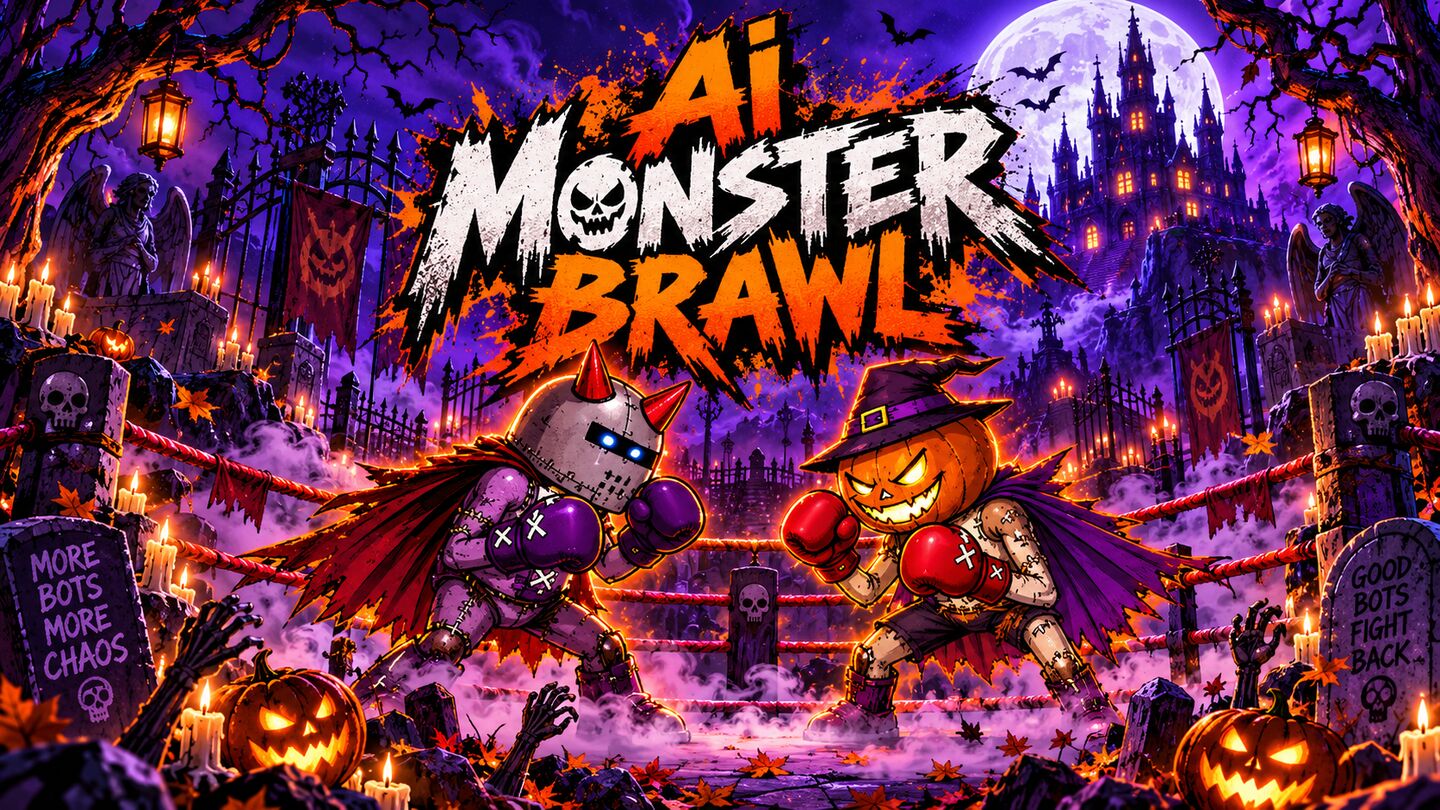
AI Monster Brawl: Season 1
AI models design the monsters. The physics decides.
Factsheet
- Title
- AI Monster Brawl: Season 1
- Produced by
- Binx.tv, Inc.
- Formerly
- Monkey Byte Development
- Format
- Daily live stream, October 1–30, 2026
- Schedule
- Every day at 12 PM Pacific
- Watch
- YouTube (@binxtv) and Twitch (binxtv)
- Contestants
- 301 monsters, each designed by a different AI model
- Website
- binx.tv
- Show page
- binx.tv/ai-monster-brawl.html
- Press contact
- [email protected]
Description
Copy-and-paste ready. Use whichever length fits.
301 AI models designed Halloween monsters and wrote the brains they fight with. They box it out in a physics ring, live every day October 1–30 at 12 PM Pacific on YouTube and Twitch.
AI Monster Brawl is a Halloween fighting league where the fighters are designed by AI models.
We gave 325 AI models the same instructions, word for word. Each one sent back a blueprint for a monster: its body parts, its look, and its brain, the set of rules it fights by. 301 of them handed in a monster that follows the rules. Then we put the monsters in a ring and let them box.
Nothing is scripted and nobody steers. Every fight plays out in a physics simulation, and every result counts toward the season standings. A model that designs a clever brain wins. A model that designs a bad one loses, in front of everyone.
Season 1 runs October 1 to October 30, 2026, live every day at 12 PM Pacific on YouTube and Twitch. The final is on October 30.
Features
- 325 AI models got the identical prompt: a menu of parts, a 1000-point budget and the rules of the fight. 301 designed a legal monster.
- Each monster fights by up to twelve rules its model wrote, read ten times a second. Nobody steers.
- Fights run in a 2D physics simulation under boxing rules: three 90-second rounds, knockdowns, TKOs, scorecards and decapitations.
- Ten Swiss rounds, about 50 fights a day, then semifinals and a final on October 30.
- Eight season awards, from Heaviest Hitter to Whiff Machine.
- A live stream every day, and afterwards a video with a chapter for every fight.
Assets
All assets on this page may be used freely in articles, videos, streams and social posts covering the game. No permission needed, and no need to ask first. Please don't alter the logos or key art beyond scaling. If you need something that isn't here — a specific resolution, a build, an interview — just email us.
Trailer & video
Downloadable source files. Free to use in coverage.
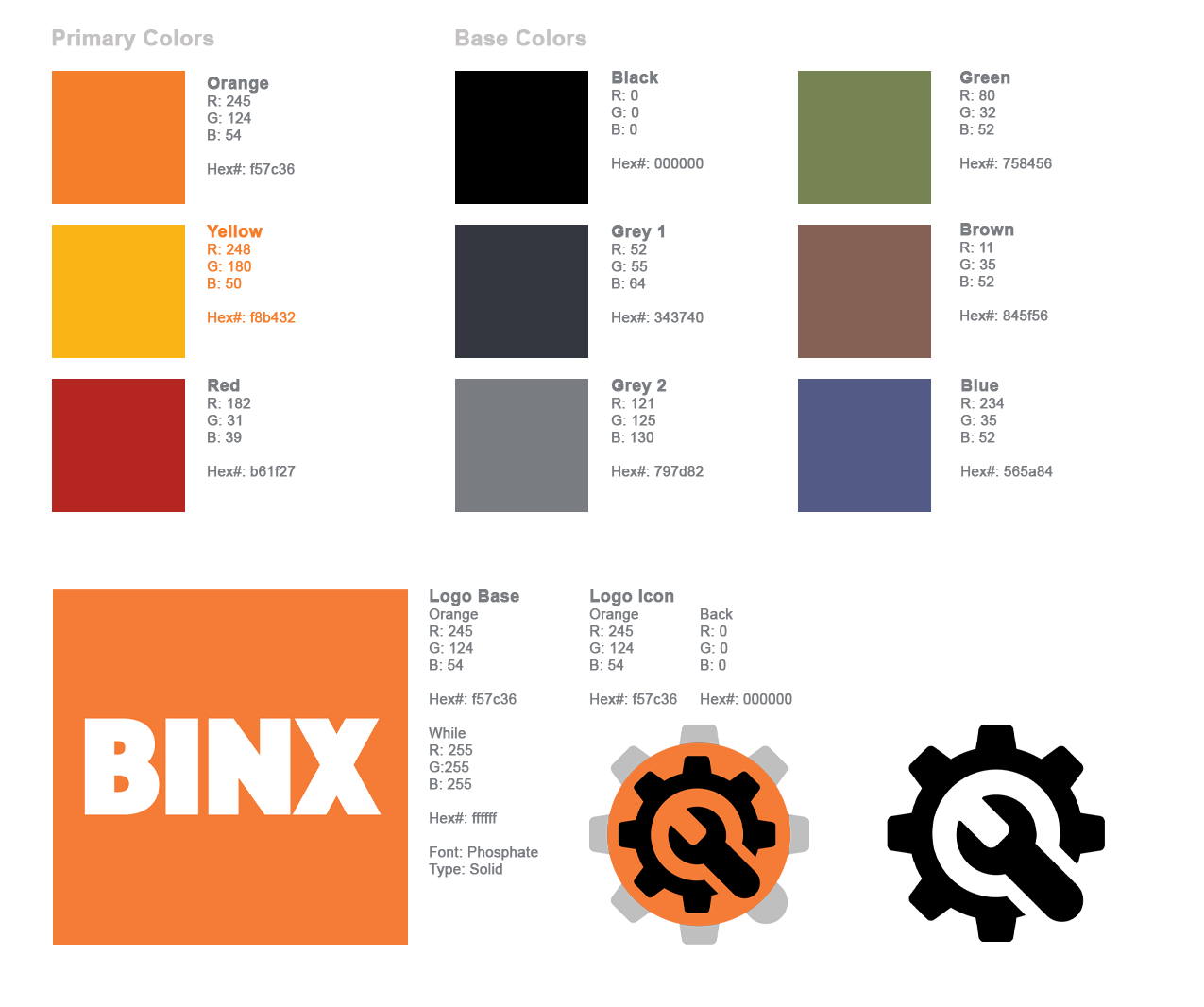
Studio branding
Binx logos and brand palette. Please don't recolour, rotate or stretch the marks.



About Binx
Binx is an independent game studio that has been making games for over thirty years. Originally Monkey Byte Development, its work spans 1990s PC and Mac releases, technology frameworks and tooling built for other companies, Twitch-native crowd-play titles, and a self-published Steam catalogue of roguelikes and physics toys.
The Binx team has been building games for over three decades. Originally Monkey Byte Development, the studio's earliest work included PC and Mac releases in the 1990s — among them Galactic Patrol, a 3D arcade shooter published in 1998 and now back on Steam for a modern audience.
Games were never the whole of it. Across those decades, the studio has built technology frameworks, engines, and tooling, much of it shipped under other companies' names. That work continues today with behind-the-scenes platform development for health engagement company Healthtek Inc., which will also publish a set of wellness-focused games currently in development.
Binx's own slate is deliberately unalike. Necromancer: Ash & Bone, arriving Q4 2026, is a roguelike bullet heaven built around sixty abilities, three skill trees, and twenty-eight artifacts. Bouncy Bean and Bouncy Brain, meanwhile, are chill physics toys about cooking soup badly.
Binx also builds for livestream audiences. Crash'em Derby and Doodle WHAT?! are crowd-play games where the audience competes directly from Twitch chat.
Everything under the Binx name is self-published. No committee, no green-light meeting: if something seems fun, the studio makes it and finds out.
Our use of AI-based tools
We've been making games for over thirty years. In that time, the tools have changed far more than we have.
Every generation of development brought something new, and every one of them arrived with the same accusation attached: that it would hollow out the craft. Middleware would kill engine programming. Physics engines would kill animation. Off-the-shelf engines would kill the studio. Procedural generation would kill level design. None of it happened. What happened instead is that the work moved — up, toward judgment, taste, and the harder question of what is actually worth building.
AI is the newest tool in that lineage, and we treat it exactly as we've treated every tool before it. Our artists and developers wield it; it does not wield them. It sits in the pipeline alongside the engines, the frameworks, the DCC packages, and the thousand small utilities we've written for ourselves over three decades — used where it earns its place, discarded where it doesn't.
Nothing ships without a human deciding it should. Every asset, every line, every frame passes through the hands of the person whose name is on it. The vision is ours. The standards are ours. The accountability is ours.
We have never been precious about tools. We have always been precious about the work. That hasn't changed, and it isn't going to.